Summary
CrystalMark Retro is a lightweight, all‑in‑one benchmarking tool designed to run on everything from Windows 95 and Windows NT 3.51 to modern Windows and Server releases. It supports x86, x64 and ARM64 architectures and measures CPU, disk, 2D (GDI) and 3D (OpenGL) performance with one‑click runs. Results can be submitted to CrystalMarkDB for centralized storage and global comparison, and the app includes multilingual support (48+ languages) and special features for testing truly retro systems.
Key Features
Broad retro and modern Windows compatibility
- Runs on Windows 95/98/Me, Windows NT 3.51/4.0 and all the way up through Windows 11 and recent Server editions, making it one of the few benchmarks that target vintage hardware alongside contemporary systems. This focus lets enthusiasts compare decades‑old machines with current hardware using consistent tests.
Comprehensive, one‑click benchmarking (CPU, Disk, 2D, 3D)
- Offers separate or combined CPU, Disk, 2D (GDI) and 3D (OpenGL) tests, including single‑ and multi‑thread CPU metrics and polygon/wireframe OpenGL scenes. Scores are normalized (e.g., adjusted to an AMD Threadripper baseline) and combined into an overall score so you can quickly assess system balance and performance.
Centralized result management and offline submission
- Submit results to CrystalMarkDB (free account) for global comparison, or generate QR codes to register runs from retro PCs that aren’t Internet‑connected. This makes it practical to archive and share benchmark data from machines with limited connectivity.
Audience
CrystalMark Retro is aimed at retro PC enthusiasts, hardware hobbyists, and anyone who needs consistent benchmarks across vintage and modern Windows platforms. It’s also useful for researchers, system builders and reviewers who want to compare long‑running hardware evolution or validate performance on unusual or legacy configurations.
Conclusion
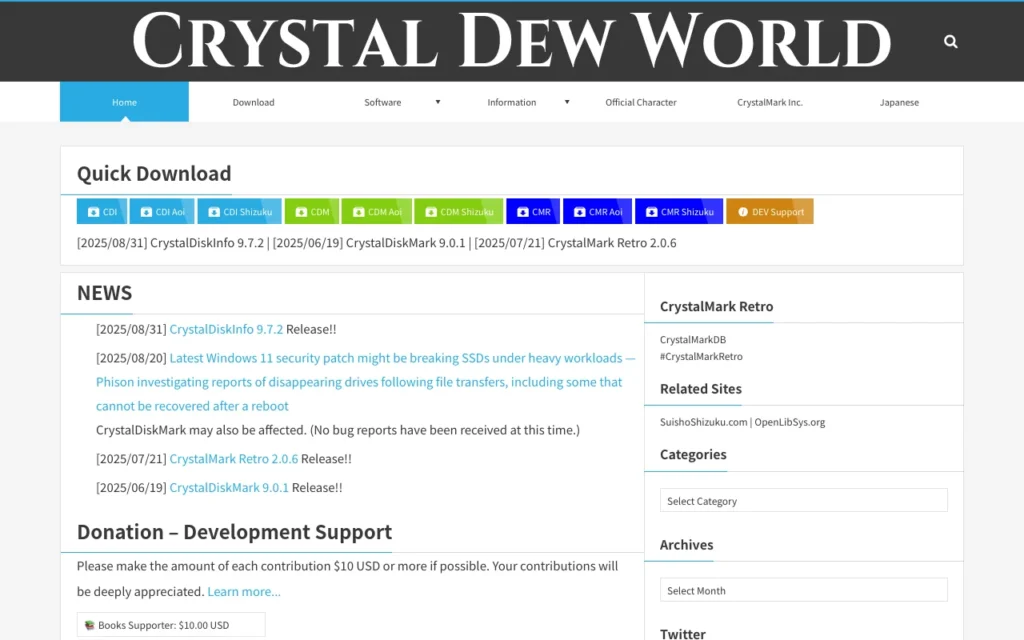
CrystalMark Retro fills a unique niche by combining deep legacy OS support with modern benchmarking features and centralized result sharing, making it a practical tool for retro testing and longitudinal performance comparison. For downloads, manual pages, and the project history, visit the official site below.